
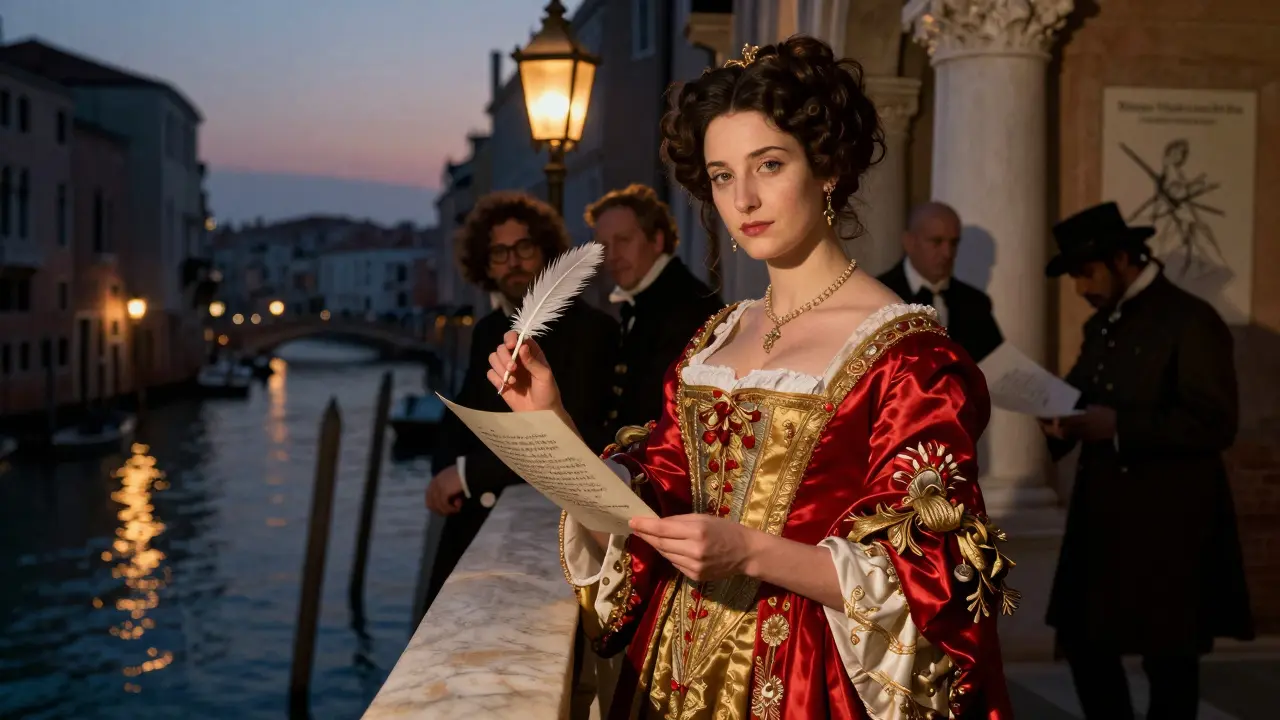
You’ve heard the whispers-women who turned charm into power, who commanded kings with a glance and outsmarted emperors with a whisper. They weren’t queens, but they ruled courts. They weren’t soldiers, but they won wars. They were courtesans, and their art of seduction wasn’t about lust-it was about strategy, intellect, and control.
What Exactly Was a Courtesan?
A courtesan wasn’t a prostitute. That’s the biggest myth. While both exchanged intimacy for money, a courtesan was a highly educated companion-trained in music, poetry, philosophy, diplomacy, and courtly manners. In Renaissance Italy, 18th-century France, or Edo-period Japan, courtesans were the elite of companionship. They didn’t just sleep with powerful men; they advised them, challenged them, and sometimes changed the course of history.
In Venice, a courtesan like Veronica Franco could publish poetry that outshone her male contemporaries. In Paris, Madame de Pompadour wasn’t just Louis XV’s lover-she was his chief political advisor, shaping France’s foreign policy and art patronage. In Japan, the oiran of Yoshiwara were ranked like royalty, with apprenticeships lasting years and clients paying fortunes just for an evening of conversation.
They were the original influencers-not with hashtags, but with influence. Their power came from being indispensable. Men didn’t just want them-they needed them. For intellectual stimulation. For social access. For emotional refuge from the rigid, sterile world of politics and war.
Why the Art of Seduction Mattered
Seduction, in the courtesan’s world, wasn’t about physical allure alone. It was about reading a room, knowing when to speak and when to stay silent, how to make a man feel like the smartest, most fascinating person alive-even when he wasn’t.
Think of it like this: if you walked into a party and everyone was talking about tariffs and taxes, but you asked someone, ‘What’s the most beautiful thing you’ve ever seen?’-you’d instantly stand out. That’s what courtesans did. They asked the questions no one else dared to. They listened better than anyone. They made men feel understood, not just desired.
They mastered the psychology of attention. A glance held a second too long. A pause before answering. The way they dressed-not too revealing, but just enough to make you wonder. They used silence as a weapon. They turned rejection into intrigue. They didn’t chase men; they made men chase the idea of them.
This wasn’t manipulation. It was mastery. And it worked because it was rooted in authenticity. The best courtesans didn’t fake emotion-they cultivated it. They learned to feel what their clients needed, even if it wasn’t what they themselves wanted.
The Tools of the Trade: Skills Beyond Beauty
Beauty helped, but it wasn’t enough. A courtesan needed a full toolkit:
- Language skills: Fluent in Latin, French, Italian, or Japanese-depending on region. Many could write poetry, translate texts, and debate theology.
- Music and dance: Played lute, harp, or shamisen. Danced with grace, not just sensuality. A single movement could convey sorrow, joy, or defiance.
- Political awareness: Knew who was rising, who was falling, and which alliances were shifting. They were the original gossip networks.
- Emotional intelligence: Could read a man’s mood in his posture, his tone, the way he held his wine. They knew when to comfort, when to challenge, and when to disappear.
- Financial literacy: Managed their own wealth, invested in property, and sometimes outlived their patrons in comfort.
These weren’t hobbies. These were survival skills. A courtesan who couldn’t hold a conversation was discarded. One who couldn’t manage money ended up destitute. Their education was rigorous, often funded by wealthy patrons who saw potential in a clever girl from the streets.
Where Courtesan Culture Thrived
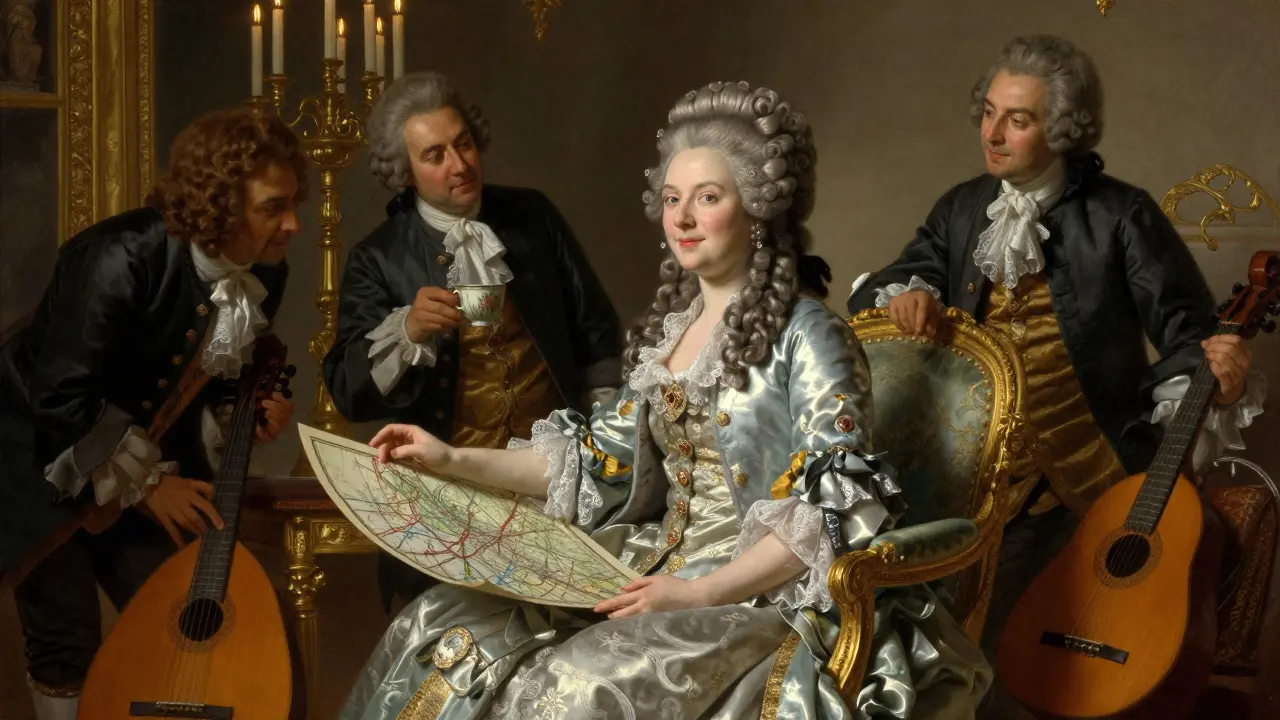
Courtesan culture wasn’t random-it flourished in places where power, wealth, and art collided:
- Italy (15th-17th century): Venice and Florence were hotspots. Courtesans like Veronica Franco and Tullia d’Aragona moved in the same circles as artists, poets, and cardinals. Some even had their own salons.
- France (17th-18th century): The court of Louis XIV and Louis XV was dominated by women like Madame de Maintenon and Madame de Pompadour. Their influence stretched from the Palace of Versailles to the Académie Française.
- Japan (17th-19th century): In Yoshiwara, the highest-ranking courtesans (oiran) were treated like living goddesses. Their makeup, robes, and hairstyles took hours to prepare. Clients waited months for an appointment. India (Mughal era): Tawaifs in Delhi and Lucknow were masters of Kathak dance and Urdu poetry. They preserved classical arts during times of war and decline.
Each culture had its own rules, but the core remained the same: intelligence was the ultimate seduction tool.
Modern Echoes: Where the Courtesan Lives Today
You won’t find courtesans walking the streets of 2026-but their legacy is everywhere.
Think about modern influencers who build empires not just on looks, but on personality. The way a CEO’s personal assistant reads his moods before he walks into a meeting. The way a therapist holds space for someone’s pain without judgment. The way a diplomat navigates a tense negotiation with a smile and a perfectly timed silence.
Even in dating apps, the most successful profiles don’t just show perfect selfies-they show depth. A quote from a book. A photo with a pet. A caption that invites conversation. That’s the courtesan’s trick: making someone want to know more.
Today’s version of a courtesan might be a high-end life coach, a cultural curator, or a CEO’s confidante. The tools have changed-no more lutes, but LinkedIn and emotional intelligence. The goal? Still the same: to be someone who doesn’t just exist in the room, but changes the energy of it.
What You Can Learn From Them
You don’t need to be a courtesan to use their lessons. Here’s what you can steal:
- Listen more than you speak. People forget what you say. They never forget how you made them feel.
- Master the pause. Silence is not awkward-it’s powerful. Let your words land.
- Invest in your mind. Read books outside your field. Learn a language. Study history. Knowledge is the most attractive accessory.
- Control your presence. Dress for the room you want to be in, not the one you’re in. Confidence isn’t loud-it’s calm.
- Build mystery. Don’t give everything away at once. Let people wonder what’s next.
These aren’t tricks. They’re habits. And they work because they’re human.
Why This Matters Now
In a world full of noise-endless posts, algorithms, swipe culture-real connection is rare. The courtesan’s art reminds us that influence isn’t about volume. It’s about resonance.
Who do you want to be remembered by? Someone who talks the loudest? Or someone who made them feel truly seen?
The courtesans didn’t rise by being the prettiest. They rose by being the most present. And that’s a lesson that never goes out of style.
FAQ: Your Questions About Courtesan Art Answered
Were courtesans considered respectable in their time?
It depended. In some circles, yes-especially among the educated elite. Courtesans like Veronica Franco were celebrated as poets and intellectuals. In others, they were vilified by the Church and lower classes. But even critics admitted their influence. Many noble families secretly sought their advice, even while publicly condemning them.
How did courtesans make money?
They earned through gifts, pensions, property, and fees for companionship. Unlike prostitutes, they didn’t charge per encounter. Instead, they built long-term relationships with patrons who provided housing, clothing, education for their children, and sometimes even titles. Some inherited wealth from former lovers and invested in land.
Could a courtesan marry into nobility?
Rarely, but it happened. Madame de Pompadour never married Louis XV, but she secured titles and land for her family. In Japan, some oiran retired and opened schools for young women. A few, like the Chinese courtesan Bai Juyi’s muse, were posthumously honored by poets and historians as cultural icons.
Did courtesans have agency, or were they victims?
Many started from poverty, and yes, some were exploited. But many others chose this path because it offered more freedom than marriage or factory work. They controlled their schedules, their finances, and their social circles. In a world where women had few rights, courtesans carved out autonomy-and sometimes, power.
Are there modern equivalents to courtesans?
Yes-think of elite concierges, high-end relationship coaches, cultural consultants, or even political advisors who build deep personal bonds with powerful clients. The role has evolved, but the core remains: emotional intelligence, intellectual depth, and the ability to make someone feel uniquely understood.
Marc Lipscke
January 8, 2026 AT 00:25This is the kind of content that makes me believe in humanity again 😊
Who knew seduction could be this deep? Not just vibes, but real strategy.
I’m printing this out and putting it on my fridge next to my to-do list.
Thanks for reminding us that being interesting beats being loud every time.
Vanessa Rose
January 8, 2026 AT 18:24Thank you for this profoundly thoughtful exploration of a historically marginalized yet intellectually formidable group of women.
It is imperative that we recognize the agency, erudition, and emotional sophistication these individuals cultivated in environments that systematically denied them formal power.
The parallels to contemporary female leaders in corporate, diplomatic, and cultural spheres are not merely coincidental-they are evolutionary.
I hope this piece is assigned in university seminars on gender, power, and communication.
Jessica Buchanan-Carlin
January 10, 2026 AT 06:20So women had to sleep with guys to get ahead huh
Guess that’s why America’s so weak now
Back in my day we just worked hard and didn’t need to flirt with kings
Why are we even talking about this
Who cares
Ankush Jain
January 11, 2026 AT 08:27Let me tell you something about India’s tawaifs they were not just dancers they were the living libraries of Mughal court culture they preserved Urdu ghazals when British colonialism tried to erase them they taught poetry to princes and fought off landlords with wit alone in Lucknow the courtesans ran salons that rivaled the British residency in intellectual weight and yet today in modern India they’re called prostitutes and their art is banned in schools while Bollywood makes movies about them as tragic victims no one remembers their names no one honors their legacy they were the original influencers with saris not selfies and you think Venice was special but Delhi’s courtesans had more influence than half the British governors put together and now we’re too busy scrolling TikTok to even know what a ghazal is
Robin Moore
January 12, 2026 AT 18:50Actually the whole courtesan thing is overblown
Most were just high-end sex workers with better lighting and a tutor
Veronica Franco? Sure she wrote poems but she was also sued for debt and had to beg the state for help
Madame de Pompadour? She got her title because Louis XV was a sap, not because she was brilliant
And don’t get me started on Yoshiwara-those girls were locked in cages with 12-hour workdays
The ‘agency’ narrative is a 21st century fantasy
Real power? Owning land, holding office, commanding armies
Not making a guy feel understood while he pays you in silk and pearls
Millennial Avid
January 13, 2026 AT 09:04Bro this is peak emotional intelligence hackathon material 🚀
Imagine if your LinkedIn profile had the same depth as a 17th-century oiran’s haiku
‘Just finished reading Machiavelli while brewing matcha’ - that’s the vibe
Modern courtesan = hybrid of therapist, strategist, and cultural curator
You don’t need a palace, just a good pause, a curated bookshelf, and the guts to say ‘Actually, let’s talk about something real’
Stop swiping. Start sensing.
The algorithm rewards noise. The soul rewards resonance.
Go be the silence in the storm.