
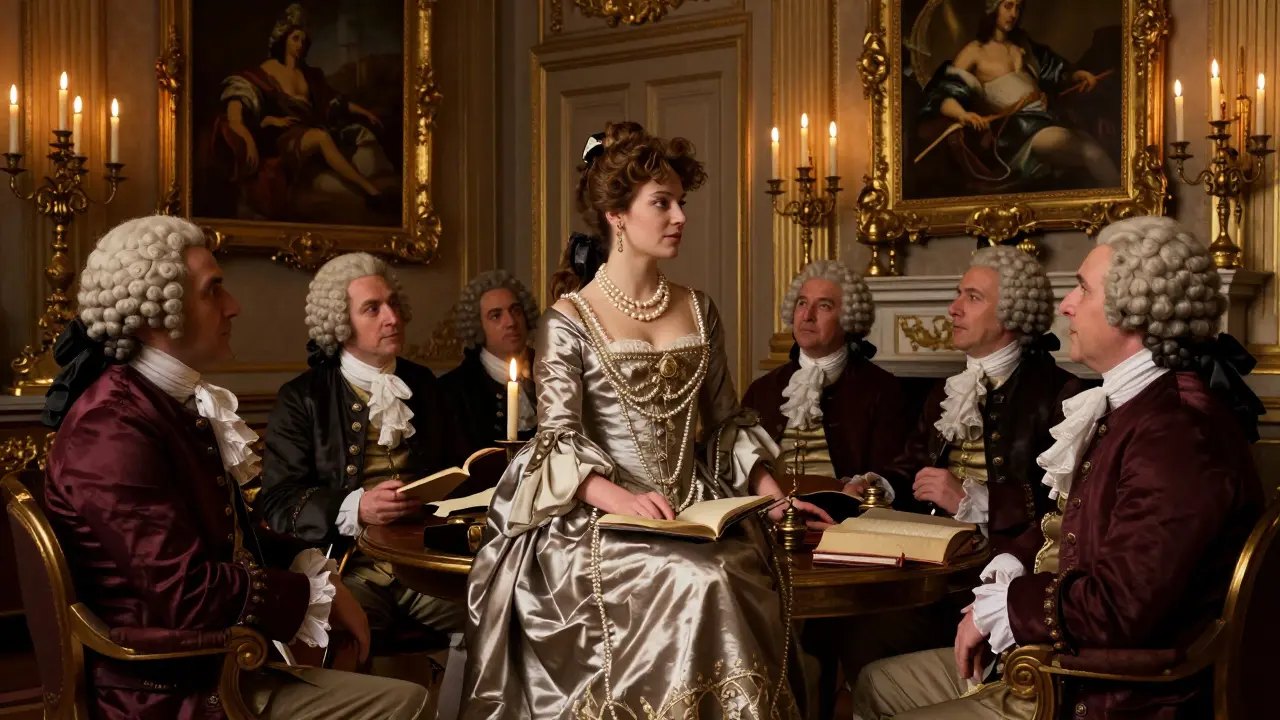
You’ve seen them in movies-glittering gowns, whispered secrets, rooms lit by candlelight. But the real story of the courtesan isn’t about romance or scandal. It’s about survival, power, and the razor-thin line between privilege and ruin. In every age, from Renaissance Venice to 18th-century Paris, courtesans lived in a world of silk and steel: admired, feared, and never fully accepted.
Key Takeaways
- Courtesans weren’t prostitutes-they were highly educated, politically connected women who traded companionship for wealth and influence.
- Their lifestyle offered luxury: palaces, art collections, private carriages-but always under the shadow of social exile.
- Success meant mastering music, poetry, politics, and seduction. Failure meant poverty, prison, or worse.
- Some became queens in all but name. Others vanished without a trace.
- Their legacy lives on in art, literature, and the quiet power of women who refused to be controlled.
The Courtesan: More Than a Mistress
When you hear the word "courtesan," you might picture a woman in a corset offering favors for money. That’s a myth. A true courtesan was a professional companion, often better educated than the men who paid for her time. She could debate philosophy, compose sonnets, and navigate court intrigue with the skill of a diplomat. Her value wasn’t in her body-it was in her mind.
In 16th-century Italy, courtesans like Veronica Franco were published poets. In France, Madame de Pompadour didn’t just sleep with King Louis XV-she shaped French art, politics, and even military strategy. These women didn’t beg for attention. They commanded it.
Unlike common prostitutes, courtesans lived in their own homes, hired servants, and owned property. Some even had legal contracts with patrons that guaranteed income, housing, and protection. Their contracts were written, not whispered. They had lawyers.
The Luxury: Palaces, Pearls, and Patronage
Imagine waking up in a room painted with gold leaf, sipping chocolate from a porcelain cup, while a violinist plays in the next chamber. That was a normal Tuesday for a top-tier courtesan in 1700s Vienna.
Her wardrobe? Designed by the best tailors in Europe. Her jewels? Often given as gifts, not bought. She attended opera boxes reserved for nobility. She commissioned portraits from famous painters-like Titian or Reynolds-and had them displayed in her salon.
But this wasn’t free. Every pearl, every carriage ride, every invitation to a royal ball came with strings attached. The courtesan had to be witty enough to hold a duke’s interest, discreet enough to avoid scandal, and loyal enough to keep her patron from walking away.
Some became so powerful they influenced wars. Catherine de’ Medici, though a queen, modeled her court after the courtesan networks she’d observed in Italy. She knew: if you control the woman who speaks to the king, you control the king.
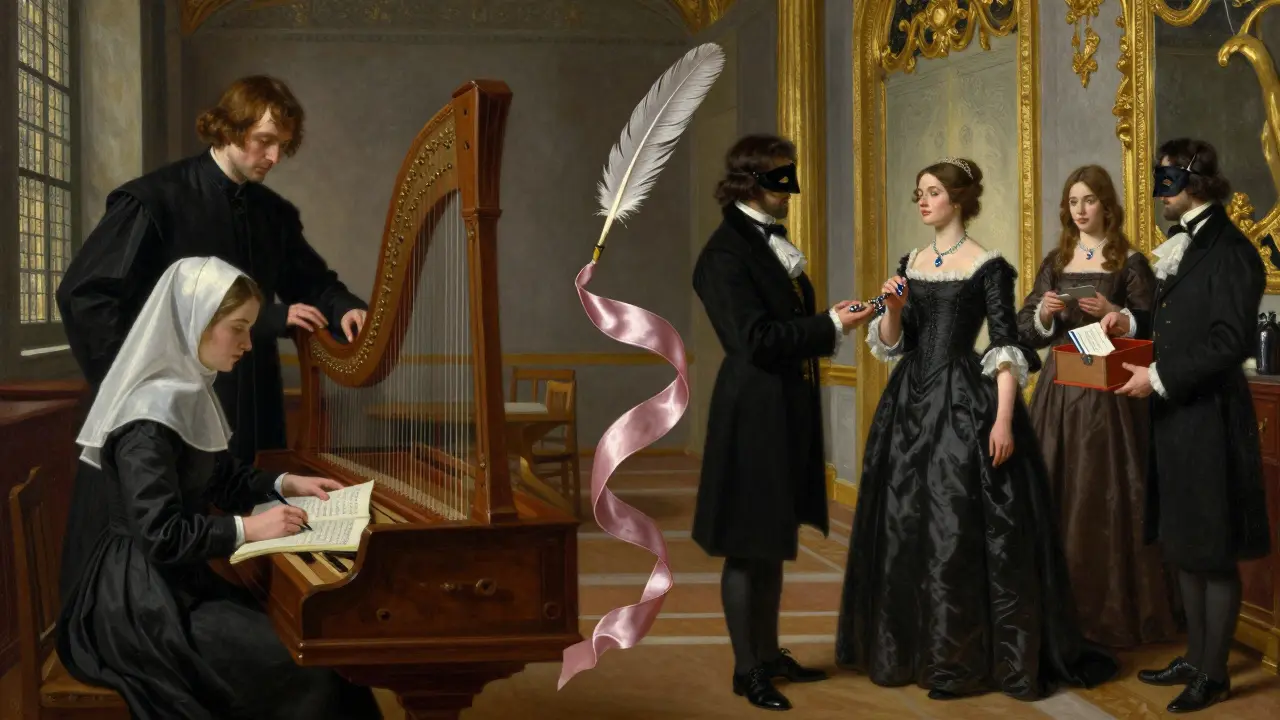
The Danger: One Misstep, Everything Lost
But luxury was fragile. A single rumor could destroy a courtesan’s reputation. A jealous wife. A rival’s slander. A patron’s sudden death.
In 1715, the famous French courtesan Marie Duplessis-later the inspiration for La Traviata-died at 23 from tuberculosis. She had a fortune, a villa, and a lover who adored her. But when her patron died, the creditors came. Her furniture was seized. Her books sold off. She was buried in a pauper’s grave.
Many courtesans lived with chronic anxiety. Even the wealthiest had no legal rights. If a patron withdrew support, they had no pension, no inheritance, no safety net. Society didn’t see them as women-it saw them as commodities. And commodities can be discarded.
Some turned to gambling to keep their lifestyle going. Others took on multiple patrons. A few became spies, passing secrets between courts. A handful were poisoned.
How They Rose: Education as Power
How did a girl from a poor family become the most talked-about woman in Paris? Education.
Courtesans were trained from a young age. They learned:
- Multiple languages (French, Italian, Latin)
- Classical literature and philosophy
- Music-singing, harpsichord, lute
- Dance and etiquette
- Politics and diplomacy
They didn’t just entertain-they commanded conversations. A courtesan who couldn’t quote Virgil or debate the merits of mercantilism was soon replaced.
Some were raised in convents, where they learned to read and write. Others were trained by retired courtesans who ran "academies"-secret schools for young women with ambition. These weren’t brothels. They were finishing schools for power.
The Two Paths: Queen or Ruin
There were only two outcomes for a courtesan: rise to the top, or collapse into obscurity.
On one side: Eleanor of Aquitaine, who began as a noblewoman’s companion, became Queen of France and then England. La Belle Otero, a Spanish courtesan, danced for kings and presidents, owned castles in the Pyrenees, and lived to 87.
On the other: thousands vanished. A woman who lost her patron in London might end up in a workhouse. In St. Petersburg, a courtesan caught without a permit could be sent to Siberia. In Venice, a courtesan who refused to pay her taxes was publicly whipped.
Their fates were written in ink, not blood-but the consequences were just as final.
Modern Echoes: Where the Courtesan Lives Today
You won’t find women in 18th-century gowns today. But the courtesan’s blueprint still exists.
Think of high-end escorts who offer intellectual companionship. Think of influencers who build empires on personal brand, not just looks. Think of women in global finance or diplomacy who navigate power through charm, intelligence, and timing.
The modern courtesan doesn’t need a palace. She needs a laptop, a network, and the courage to say no. She still trades her mind for access. Still walks the edge between admiration and exploitation.
The difference? Today, she can own her story. She can write it. Publish it. Sell it.
What You Won’t See in the Movies
Movie courtesans always have a tragic ending. They die young. They’re redeemed by love. They’re saved by a nobleman.
The truth? Most courtesans never got a happy ending. But many got something better: independence.
They chose their lives. They built wealth on their own terms. They refused to be wives, nuns, or servants. They demanded respect-even if society refused to give it.
That’s the real legacy: not the jewels, not the gowns, but the refusal to be owned.
FAQ: Your Questions About the Courtesan Lifestyle Answered
Were courtesans legally recognized?
Yes-in some places. In Venice, courtesans had to register with the state, pay taxes, and wear specific clothing. In France, they were banned from public spaces but still operated under unofficial protection. Their status was never equal to nobility, but it was often more secure than that of married women.
Could a courtesan marry?
Rarely. Marriage was seen as a step down. But some did-usually after their patron died or retired. Marie Duplessis nearly married a nobleman before her death. Others married former servants or minor nobles. The key? They had to leave the life first.
How did courtesans get started?
Many were daughters of merchants or minor nobles who couldn’t afford dowries. Others were orphans taken in by older courtesans. A few were kidnapped and forced into the trade. But the most successful ones chose it-because it offered more freedom than marriage, convents, or factory work.
Did courtesans have clients of the same gender?
Yes, though records are scarce. In 18th-century France, women like the Comtesse de la Motte had relationships with female patrons. In Ottoman courts, elite women hosted female courtesans for intellectual gatherings. Same-gender relationships were common but rarely documented.
What happened to courtesans after they aged?
A few retired to country estates with savings. Others opened boarding houses for younger courtesans. Some became teachers or writers. The unlucky ones ended up in poorhouses or as beggars. Their fate depended entirely on how wisely they managed their wealth-and whether they had allies left.
Emily S Hurricane
March 6, 2026 AT 15:43Courtesans were the original influencers. No sponsors, no algorithms-just pure skill. They knew how to hold a room, quote Virgil, and make a duke forget his wife all at once. The real power move? Owning your narrative when society refused to see you as human.
Modern parallel? Women in tech who build empires on charisma and intellect. Same game, different wardrobe.