
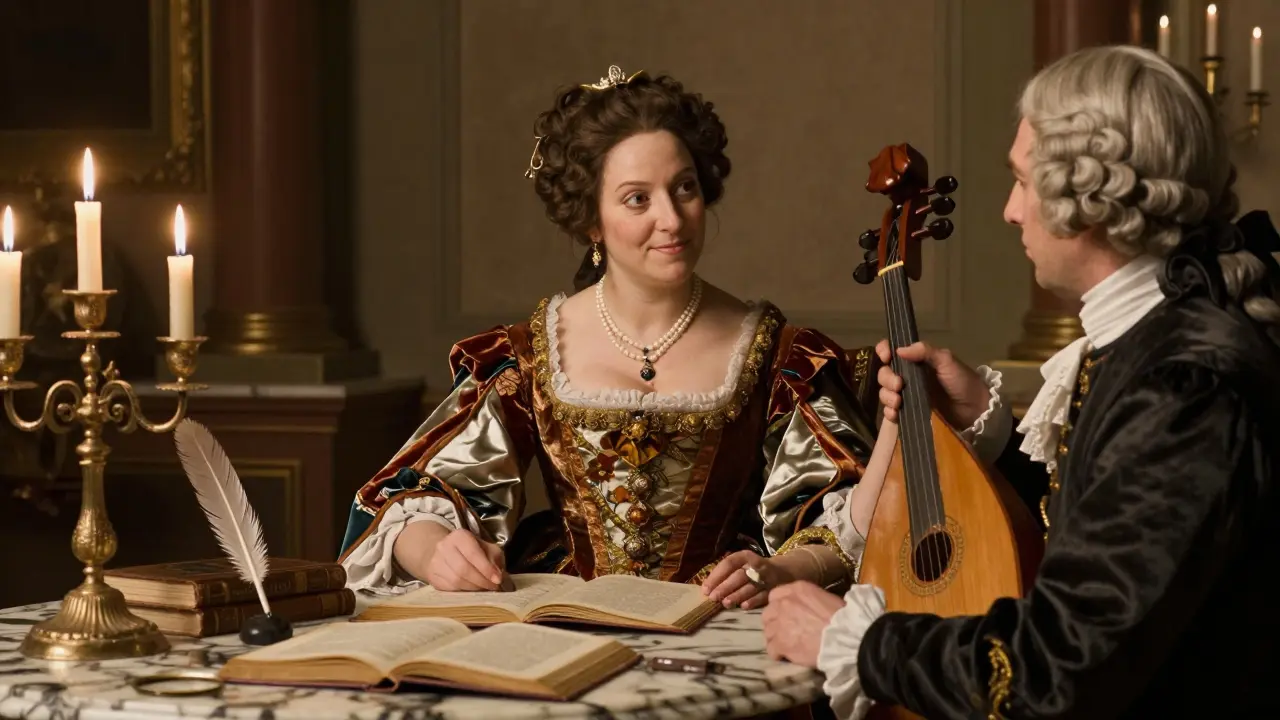
You’ve probably seen them in movies - women in elaborate kimonos, painted faces, holding fans, gliding through candlelit rooms. But were they the same? Were courtesans and geishas just different names for the same thing? If you’ve ever wondered how these two figures from East Asian history really differed, you’re not alone. The truth is, they weren’t just similar - they were built on completely different systems, expectations, and social roles. And the confusion? That’s mostly Hollywood’s fault.
Key Takeaways
- Courtesans were high-end sex workers with political influence; geishas were professional entertainers who avoided sexual relationships.
- Courtesans operated in China, Italy, and France - geishas were uniquely Japanese.
- Geishas trained for years in dance, music, and conversation; courtesans often relied on beauty and connections.
- Courtesans could become wealthy and even advise rulers; geishas were bound to their okiya (brothel-houses) and had no political power.
- Today, geishas still exist in Kyoto; courtesans vanished after the 19th century.
What Were Courtesans Really Like?
When you hear the word "courtesan," you might picture a seductress in a palace. And you’re not wrong - but that’s only part of the story. Courtesans weren’t just mistresses. They were educated, politically connected women who moved in elite circles across Europe and Asia. In Renaissance Italy, a courtesan like Veronica Franco could publish poetry and debate philosophers. In Ming Dynasty China, courtesans were trained in poetry, calligraphy, and classical music. They weren’t just there to sleep with men - they were there to impress them.
Many courtesans owned property, ran businesses, and even funded artists. Some became advisors to emperors and generals. Their value wasn’t just physical - it was intellectual. A man who wanted to be seen as cultured didn’t just take a mistress; he took a courtesan who could hold her own in a room full of scholars.
But here’s the catch: no matter how refined, their role was still tied to sexual availability. Their contracts often included sexual services. Their wealth came from patrons who paid for companionship - and intimacy - on demand.
What Were Geishas Really Like?
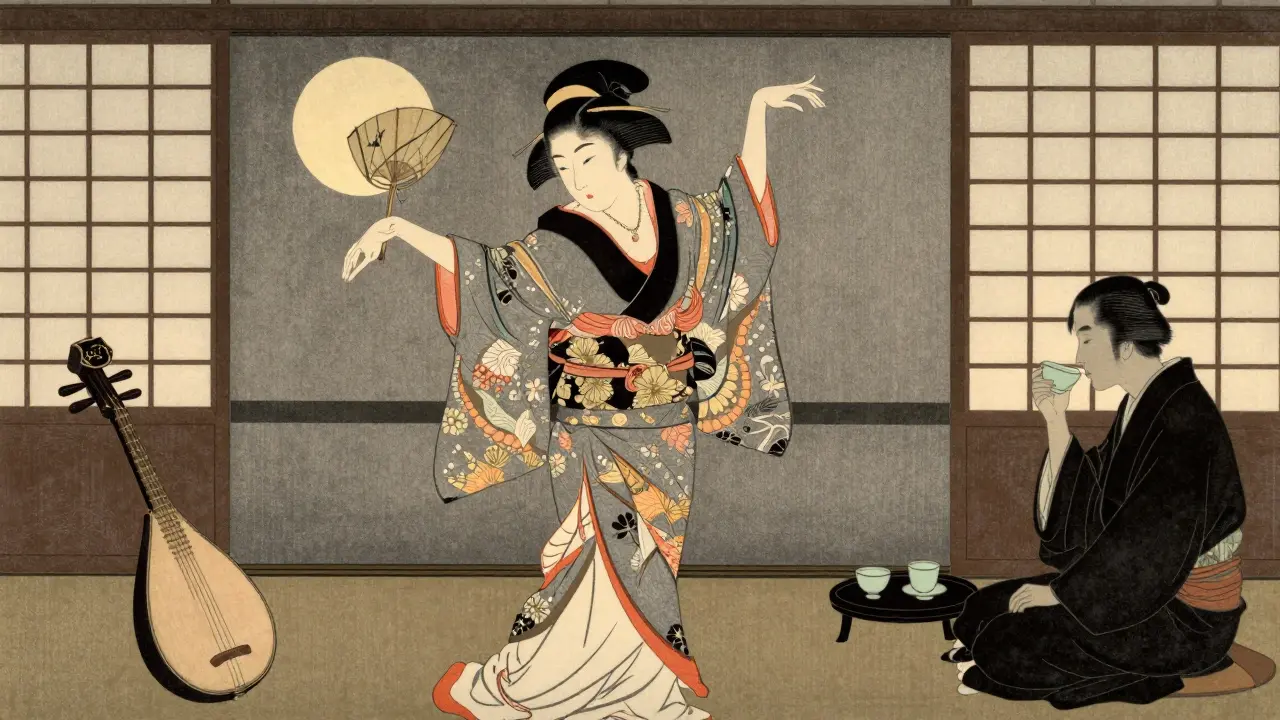
Now imagine a woman in Kyoto, sitting quietly in a teahouse. She doesn’t speak unless spoken to. She plays a shamisen, pours tea with perfect grace, and makes conversation so smooth it feels like poetry. She doesn’t sleep with clients. She never has. That’s a geisha.
Geishas were (and still are) professional entertainers. Their training began as young as 10. They learned traditional Japanese dance, music, tea ceremony, poetry, and how to read the room - to know when to laugh, when to stay silent, when to change the subject. Their goal? To make men feel understood, relaxed, and intellectually stimulated - not aroused.
Geishas worked in okiya - houses run by older women who managed their contracts, training, and wardrobe. They didn’t own their own clothes or even their own hairpieces. Everything was borrowed. Their earnings went back to the okiya until they paid off their debts - a process that could take years. Some never did.
And while courtesans were known for their affairs, geishas were forbidden from sexual relationships with clients. If a geisha did, she was often expelled. Her reputation was built on artistry, not intimacy.
Why the Confusion? Hollywood Got It Wrong
Why do people mix them up? Blame M. Butterfly, Madame Butterfly, and every 1980s movie that showed a geisha in a kimono, whispering seductively to a white officer. Those stories didn’t just misrepresent geishas - they turned them into exoticized versions of courtesans.
In reality, the two roles never overlapped. A courtesan in 17th-century Venice had more in common with a modern luxury escort than with a Kyoto geisha. The geisha’s world was about art, discipline, and emotional mastery. The courtesan’s world was about power, influence, and transactional intimacy.
Even in Japan, people used to confuse geishas with oiran - high-ranking courtesans from the Edo period. But oiran were gone by the 1870s. Geishas replaced them - not as sexual partners, but as artists.
Where Did They Operate? Geography Matters
Courtesans weren’t just Japanese. They thrived in places where wealth, art, and power intersected:
- Italy - Venice and Florence had courtesans who were literary figures and salon hosts.
- France - The maîtresse en titre of Louis XV, Madame de Pompadour, was a courtesan who shaped French culture.
- China - The "flower girls" of Nanjing and Hangzhou were educated in Confucian classics.
- Japan - The oiran (courtesans) existed alongside geishas until the Meiji Restoration banned prostitution.
Geishas? Only in Japan. Specifically in Kyoto, Tokyo, and Kanazawa. Their traditions were so tightly tied to Japanese aesthetics - wabi-sabi, ma (negative space), and omotenashi (selfless hospitality) - that they couldn’t exist anywhere else.
Training: Years of Discipline vs. Beauty and Charm
A geisha spent five to ten years in training. She learned to walk in wooden geta sandals without slipping. She practiced playing the shamisen until her fingers bled. She memorized hundreds of classical poems. She learned how to apply makeup - not to look beautiful, but to look like a work of art.
Courtesans? Their training was shorter. In Venice, a girl might be taught to dance and flirt. In China, she might learn to write poetry. But the goal was always the same: attract powerful men. Their beauty, charm, and wit were their tools - not their craft.
Geishas didn’t just charm - they performed. Every movement, every word, every silence was rehearsed. A courtesan’s charm was personal. A geisha’s was professional.
Power Dynamics: Who Held the Control?
Courtesans often held real power. Madame de Pompadour influenced French politics. A Chinese courtesan could fund a poet’s work and even help decide who got promoted in government. Some courtesans became queens.
Geishas? They had none. They were employees. Their okiya controlled their schedules, their finances, even their hair. A geisha could be famous - but she couldn’t own her own home. She couldn’t marry without permission. She had no political voice.
That’s why geishas were never called "mistresses." They were called "artists." And their art was their cage.
What Happened to Them?
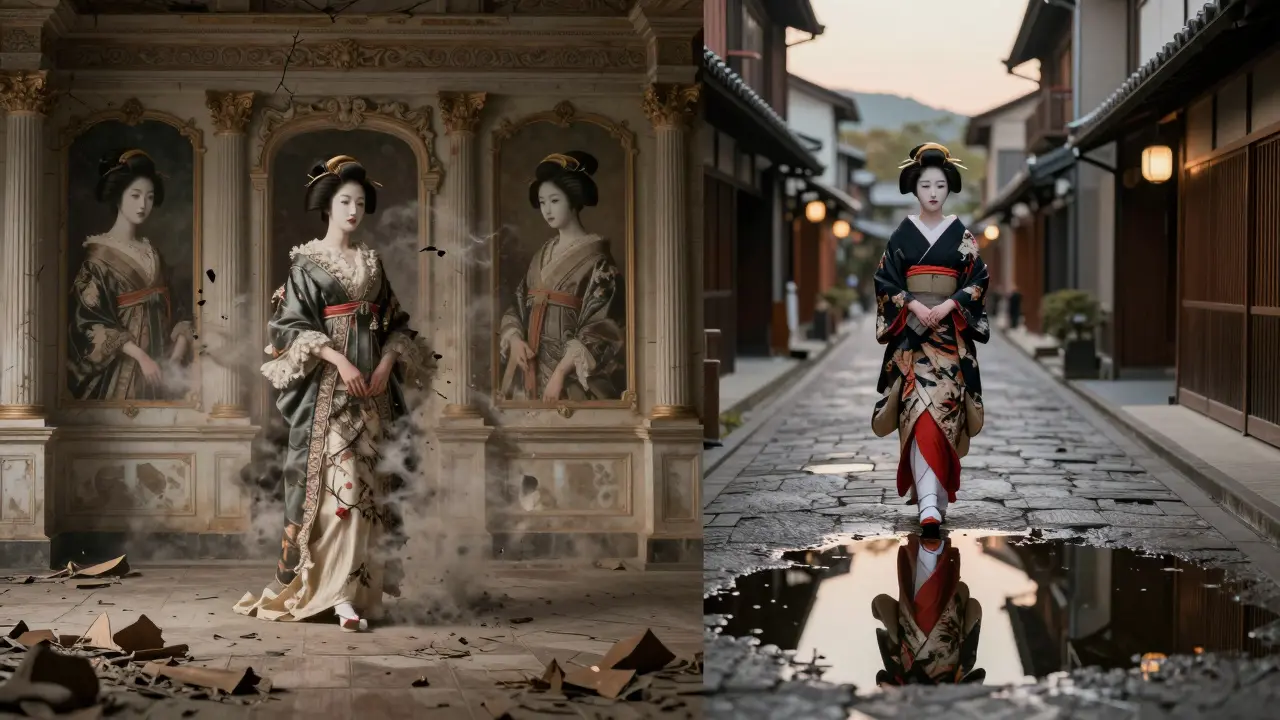
Courtesans disappeared. When prostitution was outlawed across Europe and Asia in the late 1800s, their world collapsed. No more private salons. No more imperial patronage. By 1900, they were gone.
Geishas? They survived. Not because they were allowed to keep their old role - but because they adapted. After World War II, Japan banned prostitution but allowed geisha arts to continue. Today, there are fewer than 1,000 geishas left in Japan - mostly in Kyoto. They still perform at private tea houses. They still train for years. And they still refuse to sleep with clients.
That’s the real difference. One vanished. The other endured - by refusing to become what people thought they were.
Comparison: Courtesans vs Geishas
| Aspect | Courtesans | Geishas |
|---|---|---|
| Primary Role | Sexual and intellectual companions | Professional entertainers |
| Geographic Origin | Europe, China, Japan (oiran) | Japan only |
| Sexual Relationships | Expected and common | Forbidden |
| Training Duration | Months to a few years | 5-10 years |
| Skills Emphasized | Beauty, charm, conversation | Dance, music, poetry, tea ceremony |
| Financial Control | Often owned property and income | Income went to okiya; lived in debt |
| Political Influence | Could advise rulers and shape culture | No political power |
| Modern Existence | Extinct since 1900 | Still active (fewer than 1,000 in Japan) |
Frequently Asked Questions
Were geishas ever forced into prostitution?
No - not officially. While some girls were sold into the okiya system by poor families, once trained, geishas were strictly forbidden from sexual relationships. Their value came from their art, not their bodies. Any geisha who broke this rule was expelled. This was enforced by the okiya and the geisha guilds. The confusion comes from mixing them up with oiran - the courtesans who came before them.
Could a courtesan become a geisha?
No. The two roles existed in separate systems. Even in Japan, where both existed side by side in the Edo period, they were legally and socially distinct. Courtesans (oiran) were licensed for sex work; geishas were licensed for entertainment. When prostitution was banned in 1872, the oiran vanished. Geishas continued - but they didn’t absorb former courtesans. They were a different profession entirely.
Did geishas ever have romantic relationships?
Geishas could have personal relationships - but not with clients. Many formed bonds with patrons, artists, or merchants outside of work. Some even married - but only after leaving the profession. A geisha who married while still active would lose her status. Her identity was tied to her art, not her relationships.
Why do people think geishas are prostitutes?
Because Western media has always misunderstood them. Early 20th-century novels and films portrayed geishas as exotic, submissive women available for sex. M. Butterfly and Madame Butterfly turned them into tragic lovers. In reality, geishas were highly respected artists - and their refusal to sleep with clients was part of what made them elite. The myth stuck because it was more convenient than the truth.
Are there any courtesans today?
Not in the historical sense. The traditional courtesan - educated, politically connected, funded by nobility - vanished with the fall of monarchies and the criminalization of prostitution. Modern luxury escorts sometimes mimic the courtesan’s role, but they lack the cultural depth and institutional structure. There’s no modern equivalent to a Veronica Franco or a Madame de Pompadour.
Final Thought
It’s easy to reduce history to stereotypes. But courtesans and geishas weren’t just "beautiful women in fancy clothes." One was a product of power, pleasure, and politics. The other was a product of discipline, art, and silence. One disappeared. The other still exists - not as a relic, but as a living tradition. And if you ever get the chance to see a geisha perform, don’t look for seduction. Look for mastery.