
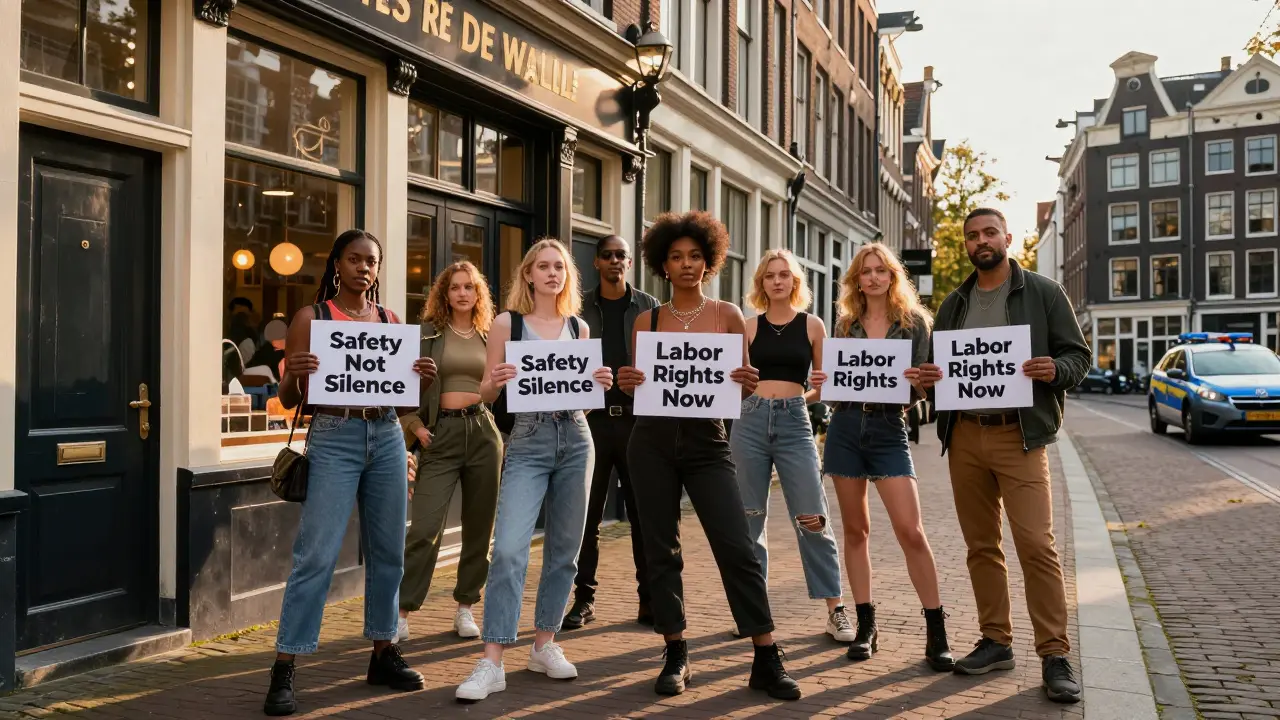
You’ve probably heard headlines about sex workers being arrested in one country, while in another, they’re organizing marches for legal protection. But what’s actually going on out there? Why do some places treat sex work as a crime, while others see it as a job? And who’s really speaking up for the people doing this work? This isn’t just about laws-it’s about safety, dignity, and who gets to decide what’s right.
Key Takeaways
- Sex work is fully legal and regulated in Netherlands and New Zealand, with workers having labor rights and health protections.
- In the United States, only parts of Nevada allow legal brothels; everywhere else, selling sex is a crime-even if it’s consensual.
- Sweden, Norway, and Iceland use the "Nordic Model," criminalizing buyers, not sellers-but critics say this still pushes workers into danger.
- Many countries, including India, Philippines, and Nigeria, have no clear laws, leaving sex workers vulnerable to police abuse and exploitation.
- Organizations like SWOP (Sex Workers Outreach Project) and Global Network of Sex Work Projects are leading global advocacy efforts for decriminalization.
Sex Worker Rights Around the Globe: What’s Really Happening?
Think about your job. You have a contract, a paycheck, maybe health insurance, and if something goes wrong, you can file a complaint. Now imagine doing the same work-but if you report a client who hurts you, the police arrest you instead of helping. That’s the reality for millions of sex workers worldwide.
There’s no single global rule. One country might treat sex work like any other business. Another might lock people up for it. And somewhere else, they pretend it doesn’t exist-leaving workers with no protection at all. The difference isn’t just about culture-it’s about power, stigma, and who gets to be seen as human.
What Does "Sex Worker Rights" Actually Mean?
Sex worker rights aren’t about promoting sex work. They’re about recognizing that when adults choose to exchange sex for money-consensually, safely, and without coercion-they deserve the same protections as any other worker.
That means:
- Not being arrested for doing their job
- Being able to report violence or theft without fear
- Access to healthcare, housing, and banking
- Legal recognition of their income for taxes and loans
- Protection from police harassment and trafficking laws that lump them in with victims
When you criminalize sex work, you don’t eliminate it. You just make it more dangerous. Workers go underground. They can’t screen clients. They can’t band together. They can’t call for help. And when violence happens, who do they turn to? The same police who might arrest them?
Where Sex Work Is Legal (and Protected)
Some places have gotten it right. Not because they’re "liberal," but because they listened to the people doing the work.
In the Netherlands is a country where sex work has been legal and regulated since 2000. Brothels are licensed. Workers pay taxes. They can unionize. Health checks are routine, not forced. In Amsterdam’s De Wallen district, you’ll find sex workers with official permits, bank accounts, and even pension plans. It’s not perfect-but it’s a system built on harm reduction, not punishment.
New Zealand is the first country to fully decriminalize sex work in 2003 through the Prostitution Reform Act. Workers aren’t required to register. No zoning laws. No police raids. The law treats sex work like any other service industry. A 2019 government review found that since the law passed, violence against sex workers dropped by 40%, and more workers felt safe reporting abuse. This wasn’t a theoretical change-it saved lives.
Germany also legalized sex work in 2002. Workers can get health insurance, apply for unemployment, and even get legal help if a client refuses to pay. In 2021, Germany passed new rules requiring condom use and regular health screenings-not to control workers, but to protect them.
Where Sex Work Is Criminalized (and Dangerous)
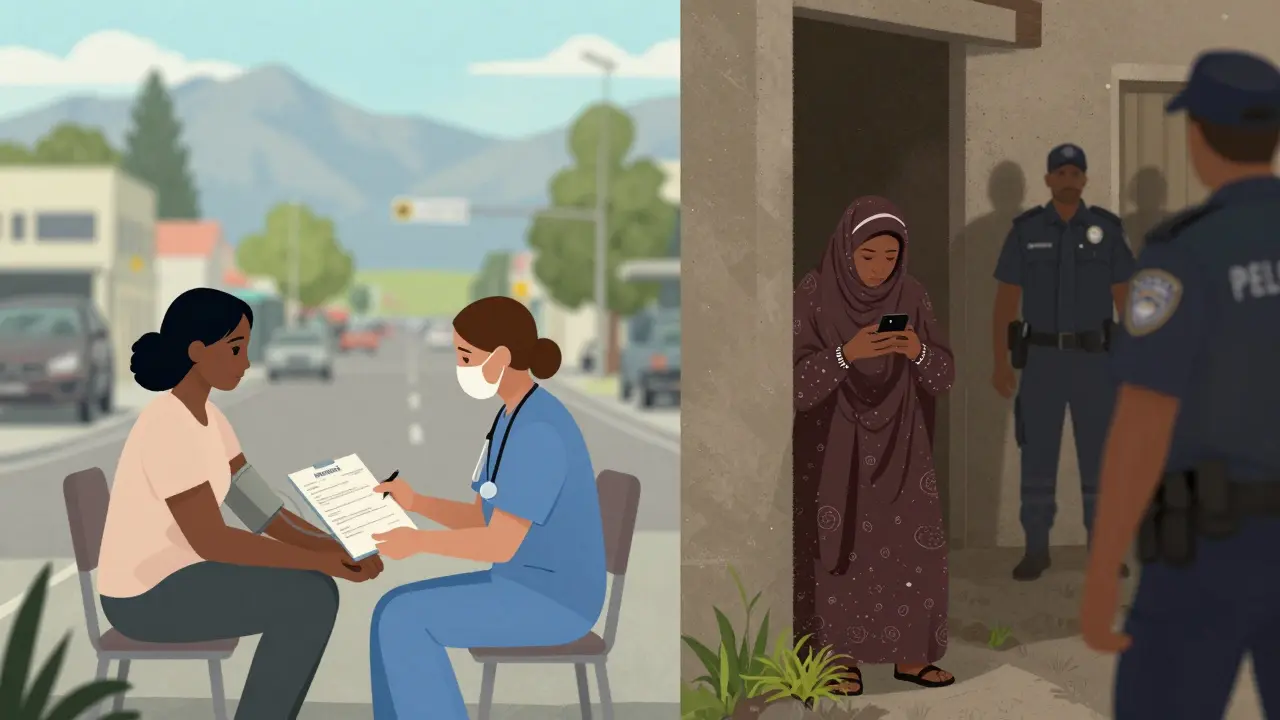
Not all countries follow this path. In the United States is a country where federal law bans prostitution, and 49 states treat it as a crime. Only 10 rural counties in Nevada allow licensed brothels-and even there, it’s tightly controlled. Outside of those areas, simply exchanging sex for money can land you in jail, even if you’re not being forced.
This criminalization has real consequences. A 2022 study from the University of California found that sex workers in criminalized areas were 3 times more likely to experience violence. They’re afraid to carry condoms because police use them as "evidence." They avoid hospitals after assaults. Many are undocumented immigrants, afraid to report anything.
In India is a country where prostitution itself isn’t illegal-but activities around it (soliciting, running a brothel) are. This creates a gray zone. Workers are often targeted by police for "public nuisance," while pimps and traffickers operate with impunity. In cities like Mumbai and Kolkata, sex workers have formed collectives to demand rights, but they’re still fighting for basic recognition.
In Nigeria is a country where sex work is illegal and heavily stigmatized. Religious leaders call it immoral. Police demand bribes. Women are arrested during raids, sometimes beaten. Many are mothers trying to feed their kids. No one talks about their rights-only about "saving" them.
The "Nordic Model": Criminalizing Buyers, Not Workers
Sweden pioneered this approach in 1999. The idea? Punish the people buying sex, not the sellers. Norway, Iceland, Canada, and France followed.
On paper, it sounds fair. Why punish the vulnerable? But in practice, it’s messy. Workers say it pushes them into more dangerous situations. If clients can’t openly negotiate, they rush transactions. Workers can’t screen clients as well. They can’t work together. And because it’s still illegal to sell sex, police still harass them.
A 2021 report from the Global Network of Sex Work Projects is an international coalition of sex worker organizations that found the Nordic Model increased stigma and made it harder for workers to access services. One worker in Oslo told researchers: "They say they’re helping us. But they’re making our lives harder. We don’t need to be saved. We need to be protected."
How Advocates Are Changing the Game
Behind every law, there’s a movement. Sex workers aren’t waiting for permission. They’re organizing.
SWOP (Sex Workers Outreach Project) is a U.S.-based group that trains workers in safety, legal rights, and peer support. They’ve helped draft policy changes in states like California and New York. In 2023, they helped pass a law in New York that removed prostitution from the list of crimes that can block housing assistance.
In Thailand is a country where sex work is widespread but illegal, groups like the Network of Sex Workers in Thailand run mobile clinics, legal aid hotlines, and even provide emergency shelter. They’ve trained over 2,000 workers to document police abuse and file formal complaints.
Even in places like Philippines is where the government has cracked down hard, underground networks of sex workers share safe meeting spots, use encrypted apps to screen clients, and have created their own emergency response teams.
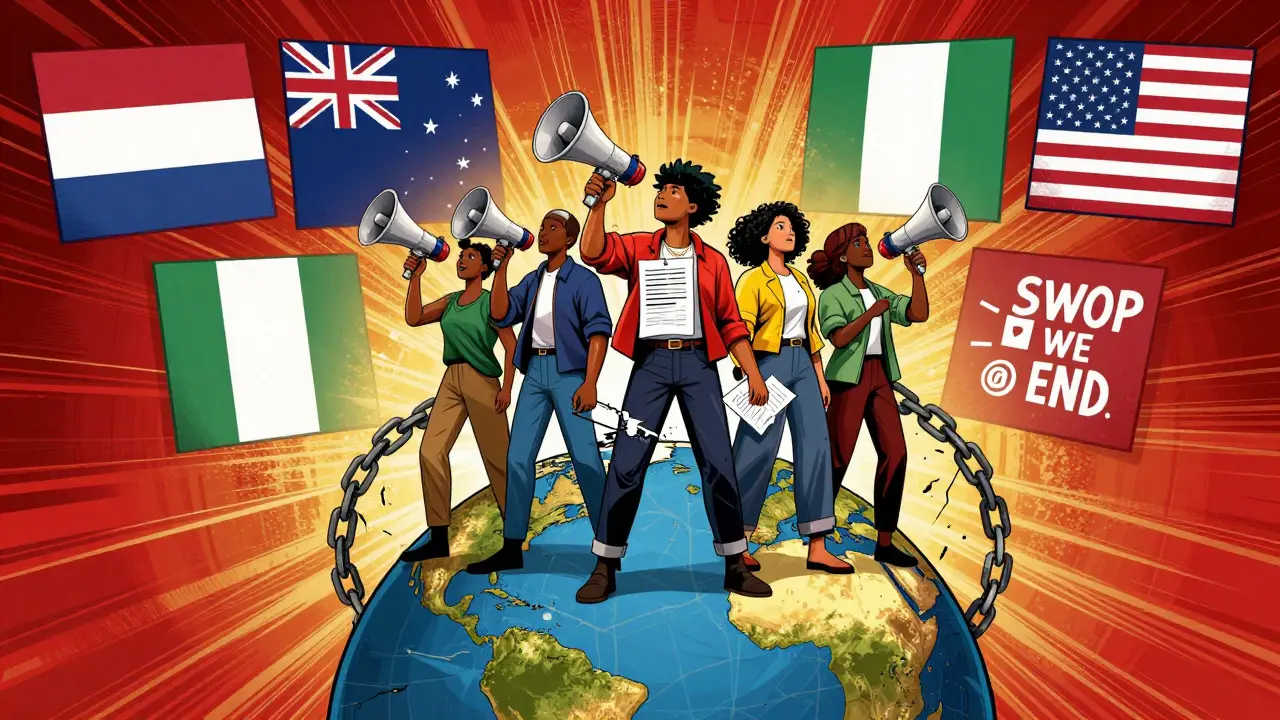
What’s Next? The Fight for Decriminalization
The movement isn’t asking for permission. It’s asking for justice.
Decriminalization doesn’t mean no rules. It means rules that protect, not punish. It means workers can go to the police without fear. It means they can open bank accounts. It means they can get health care without being judged.
More countries are starting to listen. In 2025, Canada began pilot programs in three cities to test decriminalization models. In South Africa, activists are pushing for a law that mirrors New Zealand’s. Even in conservative countries, local groups are quietly building support networks-because they know: when you criminalize survival, you don’t stop the work. You just make it deadlier.
Comparison: Legal vs. Criminalized Systems
| Factor | Legal/Decriminalized (e.g., New Zealand, Netherlands) | Criminalized (e.g., USA, Nigeria) | Nordic Model (e.g., Sweden, Canada) |
|---|---|---|---|
| Can workers report violence? | Yes, without fear of arrest | No, risk of arrest | Partially, but still stigmatized |
| Access to healthcare | Yes, integrated services | Often denied or feared | Reduced due to stigma |
| Police harassment | Low | Very high | Still common |
| Ability to work together | Yes, can form collectives | Forbidden, isolated | Discouraged |
| Violence rates | Lower (up to 40% reduction) | Higher (up to 3x more) | Similar to criminalized |
| Access to banking/lending | Yes | Almost never | Very limited |
Frequently Asked Questions
Is sex work always exploitative?
No. While trafficking and coercion are serious crimes that must be addressed, many people choose sex work as a way to earn income-just like any other job. Studies from the World Health Organization and the Lancet show that when sex work is decriminalized, workers report higher autonomy, better safety, and less coercion. The issue isn’t the work itself-it’s the stigma and laws that make it dangerous.
Why don’t more countries legalize sex work?
Mainly because of stigma and political fear. Politicians worry about backlash from religious or conservative groups. But the real reason? Many decision-makers have never talked to a sex worker. When they do-like in New Zealand’s public hearings-they hear stories of mothers, students, and migrants who need protection, not punishment. Change happens when voices are heard.
Can sex workers get loans or housing?
In countries where it’s legal or decriminalized-yes. In the Netherlands, sex workers can get mortgages. In New Zealand, they can open businesses and apply for government grants. In criminalized areas, banks often refuse them. One worker in Texas told a reporter: "I made $8,000 last month. But I couldn’t rent an apartment because my income "isn’t legitimate."
What’s the difference between legalization and decriminalization?
Legalization means the government sets strict rules-like licensing, zoning, inspections. Decriminalization means removing criminal penalties entirely and treating sex work like any other job. Decriminalization gives workers more control. Legalization can still be controlling. Think of it like this: legalization is like being allowed to drive-but only on one road, with a police officer in your back seat. Decriminalization is like being allowed to drive anywhere, with traffic laws that protect everyone.
How can I support sex worker rights?
Start by listening. Follow organizations like SWOP or the Global Network of Sex Work Projects. Donate. Share their work. Challenge myths when you hear them. Don’t assume someone is "trapped"-ask what they need. And if you’re in a position to influence policy-vote for leaders who support decriminalization. Real change comes from solidarity, not pity.
What You Can Do
If you care about human rights, you care about this. Sex workers aren’t a distant issue. They’re your neighbors, your coworkers, your friends. The laws that affect them affect us all-because once you start criminalizing survival, where do you draw the line?
Next time you hear someone say "sex work should be illegal," ask: "Who does that protect? And who does it hurt?"
Cherie Corbett
February 16, 2026 AT 09:27This is just another excuse to normalize selling your body. What happened to dignity? People should be ashamed, not protected. I don't care if they call it a "job"-it's still degradation wrapped in activism.
Why don't we just legalize heroin too while we're at it? Progress for progress' sake.
They're not workers-they're victims waiting for a hug and a paycheck.
Grant Cousins
February 16, 2026 AT 23:44Legalization without regulation invites exploitation. The Netherlands model requires oversight. New Zealand’s decriminalization works because it removes criminal penalties-not because it ignores risk.
Protecting sex workers requires structure, not sentiment. Policy must be evidence-based, not ideological.
Zac C
February 17, 2026 AT 14:57You say "decriminalization" but you mean legalization. Big difference. Decriminalization means no laws. Legalization means rules. You got it wrong. Again.
Also, "Nordic Model" isn't "messy"-it's the only one that reduces demand. And you misspelled "prostitution" in the table. Fix it.
Owolabi Joseph
February 19, 2026 AT 06:56In Nigeria, criminalization is a structural necessity. The state cannot afford to legitimize transactional sex in a context of systemic poverty. The moral economy demands suppression.
Decriminalization is neoliberal fantasy. You're conflating autonomy with commodification. The worker isn't an agent-she's a node in a predatory market.
Brian Barrington
February 20, 2026 AT 06:11Let’s get real. The whole debate is a mirror. We don’t hate sex work. We hate the idea that someone could choose it without being broken.
But here’s the kicker: if you don’t let people work safely, you’re not protecting them-you’re punishing their survival.
And yes, I know you think that’s naive. But ask yourself-why do we let people die in alleys so we can feel morally superior?
It’s not about morality. It’s about power. Who gets to decide who deserves safety?
And if you think decriminalization = chaos, then explain why New Zealand’s violence rates dropped 40%?
Oh right. You won’t. Because data doesn’t fit your worldview.
And that’s the real crime here.
Lilith Ireul
February 20, 2026 AT 08:58Y’all are so obsessed with labels you forget these are PEOPLE
Not "subjects" not "victims" not "prostitutes"-actual humans with moms and bills and bad days and dreams
And you wanna argue semantics while they’re getting beat up in back alleys because you think "legalization" sounds too icky
Grow up
Daniel Christopher
February 20, 2026 AT 12:57If you’re going to legalize sex work, why not legalize child prostitution next? Where’s the line?
It’s not about choice. It’s about corruption.
And don’t give me that "it’s a job" crap. No one chooses this. They’re forced by poverty, trauma, or manipulation.
Stop romanticizing exploitation.
Cooper McKim
February 22, 2026 AT 06:26You frame decriminalization as liberation-but that’s liberal mythmaking.
Decriminalization doesn’t erase power asymmetries-it just sanitizes them.
The state doesn’t protect workers; it co-opts them into a neoliberal framework where their labor is commodified under the illusion of autonomy.
And let’s not pretend the Nordic Model is flawed-its success lies in shifting stigma onto the buyer, not the seller.
You’re conflating safety with legality. They’re not the same.
Legalization without structural redistribution is just capitalism with a velvet glove.
Priya Parthasarathy
February 23, 2026 AT 08:41As someone from India, I’ve seen how gray laws hurt more than clear ones.
When police can arrest you for "public nuisance" but not the men who pay you, you’re not protected-you’re weaponized.
Our collectives in Mumbai aren’t asking for permission.
They’re asking for dignity.
And yes, some do it because they have no other choice.
But that doesn’t mean we should ignore those who choose it.
Justice isn’t about purity.
It’s about power.
And right now, power is on the side of the police, the clients, and the silence.