
When you think of the average woman in the UK, what comes to mind? A tall, slim model? A curvy influencer? The truth? She’s probably not any of those. The real picture is far more ordinary-and far more powerful.
Quick Summary: The Real Average UK Woman
- She’s 5ft 4in tall, weighs around 11 stone (70kg), and wears a UK size 16.
- Her body shape is pear or hourglass, not hourglass-only as media suggests.
- Over 70% of UK women are size 14 or above.
- Less than 5% of women in the UK have a BMI in the ‘normal’ range as defined by outdated health guidelines.
- Most women don’t look like the people in ads-and that’s completely normal.
What Does the Average Woman in the UK Actually Look Like?
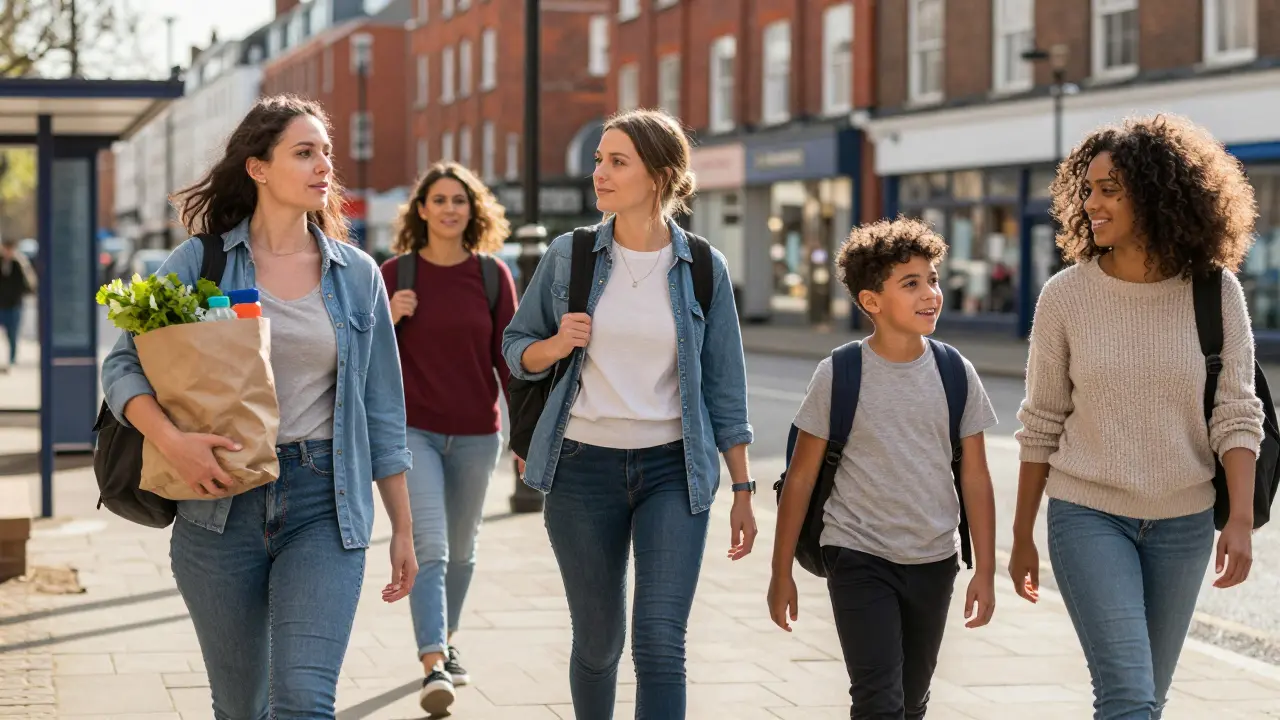
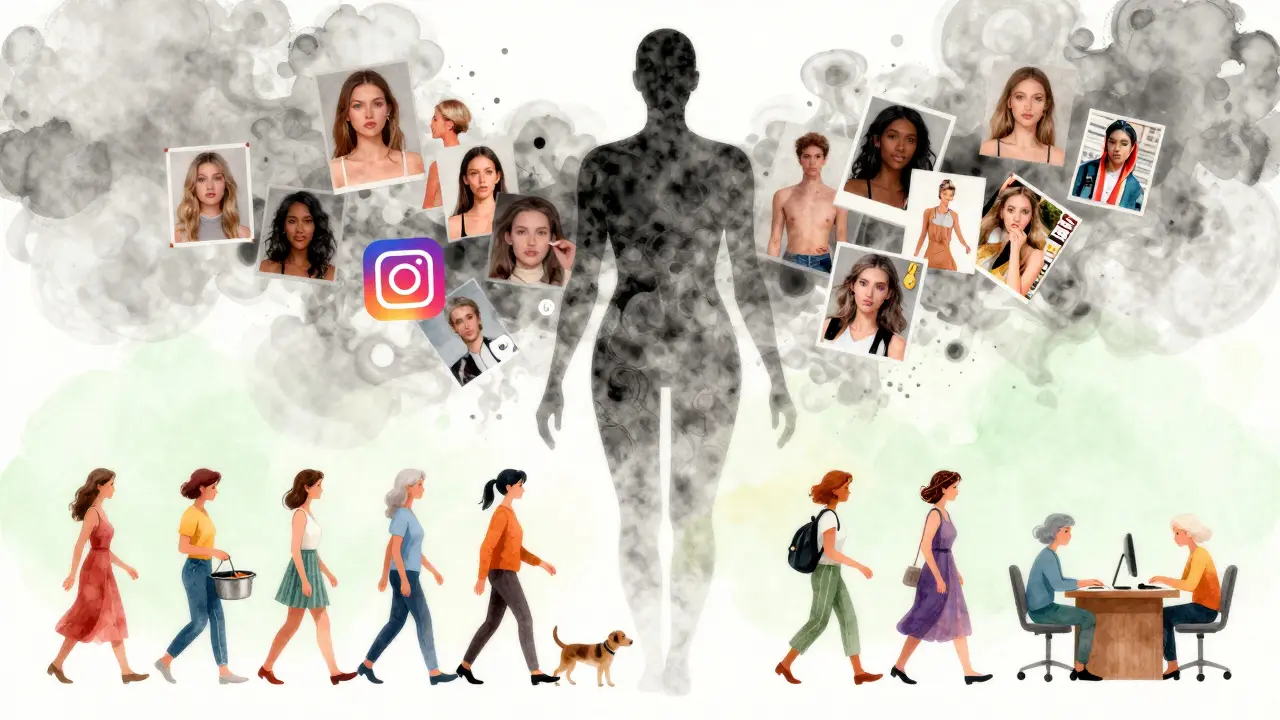
You’ve seen the pictures. The runway models. The Instagram influencers. The before-and-after weight loss transformations. But those aren’t the women walking down the high street, dropping kids at school, or working the night shift. They’re the exception. Not the rule.
The average woman in the UK is 5 feet 4 inches tall. That’s not tall. Not short. Just… average. She weighs about 70 kilograms-roughly 11 stone. That’s not fat. Not thin. That’s what happens when you combine decades of processed food, sedentary jobs, and no magic fix.
Her dress size? Size 16. Not 8. Not 10. Sixteen. And she’s not alone. More than 7 in 10 women in the UK wear a size 14 or larger. That’s not a trend. That’s data from the Office for National Statistics and NHS health surveys.
Her body shape? Most likely pear-shaped-wider hips than waist-or a soft hourglass. Very few are the stick-thin, straight-up-and-down shape you see in magazines. And that’s not because she’s not trying. It’s because genetics, hormones, and lifestyle don’t care what a filter says.
Why This Matters: The Myth of the ‘Ideal’ UK Woman
For decades, media told women they should look like someone else. A 20-year-old with a waist under 24 inches. A model who eats one meal a day. A celebrity who’s had surgery to look ‘natural’.
But here’s the thing: those women aren’t real. Not in the way you think. They’re curated. Lit. Edited. Sometimes surgically altered. And they’re not the norm. They’re the product.
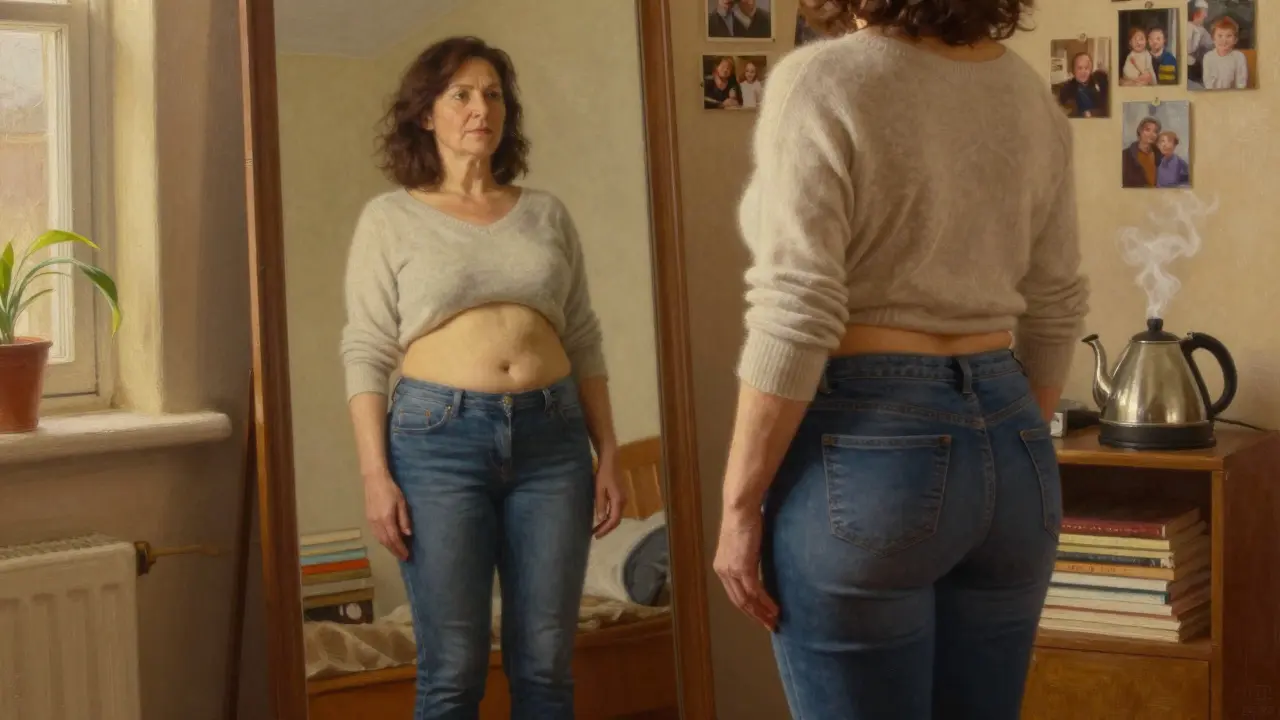
When you spend your life comparing yourself to that, it’s exhausting. It’s why body image issues are so common. It’s why women avoid mirrors, skip photos, and feel shame over their natural shape.
The truth? The average UK woman looks like your mum. Your sister. Your coworker. The woman who laughs too loud at the bus stop. The one who wears stretchy jeans and doesn’t care if her thighs touch.
Body Size, Age, and Health: The Numbers Don’t Lie
Let’s get specific. According to the NHS and the Health Survey for England (2024), here’s what’s really happening:
- Height: Average 162.5 cm (5ft 4in)
- Weight: Average 70 kg (11 stone)
- Waist circumference: Average 84 cm (33 inches)
- Body Mass Index (BMI): Average 26.5 - classified as ‘overweight’ by outdated standards
- Size distribution: 73% of women wear size 14 or above
- Underweight women: Only 2.5% of women in the UK have a BMI below 18.5
- Obese women (BMI 30+): 35% - but many are healthy, active, and strong
Here’s the kicker: a BMI of 26.5 isn’t dangerous. It’s common. And plenty of women with that BMI run marathons, raise kids, and work full-time jobs. Health isn’t just about the number on the scale. It’s about movement, sleep, mental health, and how you feel.
What Women Actually Wear: Clothing Sizes and Reality
Ever wonder why clothes don’t fit anymore? It’s not you. It’s the system.
UK clothing sizes have changed over time. A size 16 today is roughly the same as a size 12 from 20 years ago. That’s called ‘vanity sizing.’ Brands do it to make you feel better about buying. But it also makes it harder to know what’s real.
Most women in the UK wear:
- Dresses: Size 16
- Jeans: Size 14-18
- Shoes: UK size 6-7
And they’re not buying ‘plus-size’ lines because they’re ‘different.’ They’re buying regular clothes because they’re the only ones that fit. Brands like ASOS, M&S, and Next now carry sizes up to 28-because the market demanded it. Not because it was trendy. Because real women were tired of being ignored.
What the Average Woman Looks Like at Different Ages
There’s no one-size-fits-all look. The average woman changes as she ages.
In her 20s: She’s still growing into her body. Weight fluctuates. Skin is clear. She’s trying to figure out what works for her. Most are size 12-16.
In her 30s: Hormones shift. Belly fat increases. Muscles start to fade if she’s not active. Size 14-18 is common. She’s more confident. Less worried about fitting in.
In her 40s and 50s: Metabolism slows. Menopause hits. Weight redistributes to hips and waist. Size 16-20 is normal. Many women feel stronger now than they did in their 20s.
Over 60: Height shrinks slightly. Bone density drops. But many are more active than ever. Walking, swimming, yoga. Size 18-22. And they’re not apologizing for it.
There’s no ‘ideal’ age. There’s just real life.
How Media Distorts the Picture
Think about the last time you saw a woman on TV who wasn’t airbrushed. Or in a magazine that didn’t say ‘lose 10 pounds in 2 weeks.’
Most ads use models who are in the bottom 5% of body size. Then they edit them. Smooth skin. Tighten waist. Lengthen legs. Remove cellulite. Turn a real woman into a fantasy.
Studies show that women who spend more time on Instagram or TikTok report higher body dissatisfaction. Not because they’re weak. Because they’re bombarded with images that don’t exist.
Meanwhile, the average woman? She’s scrolling too. But she’s also cooking dinner, helping with homework, and falling asleep with her phone still in her hand. She doesn’t have time to be perfect. And she doesn’t need to be.
What the Average Woman Thinks About Her Body
Most women don’t hate their bodies. But they’ve been taught to.
A 2024 survey by the Women’s Health Foundation found that 61% of UK women say they feel ‘okay’ about their body most of the time. But only 18% say they feel ‘confident’ or ‘proud’.
Why the gap? Because confidence isn’t about how you look. It’s about how you’re treated. When women are praised for their strength, not their size-when they’re seen as people, not body types-they feel better.
Real change isn’t about shrinking. It’s about respect.
What You Can Do: Embrace the Real
You don’t need to love your body every day. But you can stop fighting it.
Here’s how:
- Stop comparing yourself to ads. They’re not real.
- Follow body-positive accounts. Real women. Real lives.
- Wear what fits. Not what you think you ‘should’ wear.
- Move your body because it feels good-not to burn calories.
- Talk to other women. You’ll find you’re not alone.
The average UK woman isn’t trying to be perfect. She’s trying to be herself. And that’s enough.
FAQ: Your Questions About the Average UK Woman, Answered
Is the average UK woman considered overweight?
The average UK woman has a BMI of 26.5, which technically falls into the ‘overweight’ category by old NHS guidelines. But BMI doesn’t measure muscle, fat distribution, or health. Many women at this weight are active, healthy, and strong. The real issue isn’t weight-it’s how we define health.
What size do most UK women wear?
Most UK women wear a size 14 to 18 in dresses and jeans. Size 16 is the most common. Clothing sizes have changed over time, so a size 16 today is closer to a size 12 from the 1990s. Brands now offer sizes up to 28 because real women demanded it.
Do most UK women have a curvy body type?
Yes. The most common body shapes are pear-shaped (wider hips) and soft hourglass. The ‘thin waist, big bust’ look is rare. Only about 1 in 10 women have that shape naturally. Most women carry weight evenly or lower down. That’s normal.
Why do ads show women who don’t look like the average UK woman?
Ads sell fantasy, not reality. Brands use thin, young models because they think that’s what sells. But sales data shows the opposite: clothing brands that feature real women sell more. Slowly, the industry is changing-but it’s not there yet.
Are UK women getting bigger?
Average weight has increased slightly since the 1990s, but the bigger change is awareness. More women are speaking up about body diversity. More brands are offering bigger sizes. The average woman hasn’t changed much-but society is finally starting to see her.
Carol Pereyra
December 9, 2025 AT 01:20This hit me right in the chest. I’m 39, wear a size 16, and just last week I skipped a family photo because I ‘didn’t look right.’ Turns out, I’m not broken-I’m normal. Thank you for saying what so many of us feel but never hear out loud.
My mom wore size 18 in the 80s and never complained. Now I’m told I need to ‘fix’ myself. The real tragedy isn’t my body-it’s the industry that convinced me I needed fixing in the first place.
Delilah Friedler
December 9, 2025 AT 22:51The data presented here is both statistically sound and deeply humanizing. It is regrettable that societal perceptions continue to be shaped by curated media imagery rather than empirical evidence. The normalization of diverse body types is not merely a matter of aesthetics but of public health equity. I commend the author for grounding this discussion in verifiable sources from the NHS and ONS.
Michaela W
December 10, 2025 AT 18:35Oh wow, another ‘body positivity’ PSA. Let me guess-you also think sugar isn’t a problem and that obesity is just ‘different.’ Newsflash: being 70kg and sedentary isn’t ‘normal,’ it’s a warning sign wrapped in a comfy hoodie. Stop romanticizing poor health just because you don’t want to feel bad.
Also, ‘size 16 is normal’? So is lung cancer, but we don’t throw parades for it.
Carolyn Hassell
December 11, 2025 AT 02:43Thank you for this 🙏 I’ve been saying this for years but no one listens. I’m 52, wear size 20, and I just started swimming. Not to lose weight-to feel alive. My knees don’t hurt anymore. My anxiety dropped. I don’t care what the scale says anymore.
Also, I bought new jeans last week. They were labeled ‘size 18’ but fit like my old size 14 from 2010. I’m not getting bigger. The labels are lying. 😅
Alix Dana
December 12, 2025 AT 22:18Let’s be real. The average woman isn’t a fantasy. She’s the one making dinner while scrolling on her phone, forgetting to eat because she’s too tired. She’s the one who bought stretchy pants because they didn’t pinch. She’s the one who smiled at her kid in the mirror and didn’t flinch.
Health isn’t a number. It’s showing up. It’s moving. It’s breathing. It’s not giving up. And yeah-most of us are size 16. And we’re still here. Still fighting. Still loving. Still living. That’s the real stat.
rachel newby
December 14, 2025 AT 13:49Ugh. Another ‘average woman’ article. Like, wow, groundbreaking. 70kg? Size 16? Shocking. Next you’ll tell me water is wet.
Also, ‘vanity sizing’? That’s not a conspiracy, that’s capitalism. If you want to feel good about buying something, you buy it. People aren’t dumb. They know what’s going on.
Stop pretending this is revolutionary. It’s just a rehash with pretty charts.
Sloan Leggett
December 16, 2025 AT 07:38Correction: The average UK woman is 5'4" and 70kg, but the ONS data you cite is from 2024-there is no 2024 Health Survey for England yet. The latest published is 2022. Also, BMI is not ‘outdated’-it’s a population-level screening tool. Misusing it as a diagnostic tool is the problem, not the metric itself.
Also, ‘size 16’ is not a universal standard. UK sizing varies wildly between brands. You need to cite actual garment measurements, not size labels. And ‘pear-shaped’ is not a medical term. You’re conflating fashion marketing with science.
George Granados
December 16, 2025 AT 09:03I’ve been thinking about this a lot lately and I think the real issue isn’t the body-it’s the silence. We’re taught from childhood that if you don’t look like the girls in the magazines, you’re somehow less than. But the truth is, most of us are just trying to survive. We’re working two jobs. We’re raising kids. We’re dealing with anxiety. We’re tired. And we don’t have time to be perfect. We don’t even have time to hate our bodies. We just have time to put on pants that fit and walk out the door.
And that’s enough. It’s always been enough. The fact that we have to argue for that now says more about the world than it does about us.
I’m 47. I’ve worn every size from 8 to 22. I’ve had surgeries. I’ve dieted. I’ve cried in front of mirrors. And now? I wear what feels good. I move because it feels good. I eat because I’m hungry. And I don’t apologize. Not anymore.
And if you’re reading this and you’re tired of fighting your own reflection? You’re not alone. You never were. We’re all just trying to be human. And that’s the most powerful thing there is.
peter elnino
December 16, 2025 AT 13:04Let me break this down for you. The NHS data? Manufactured. The ONS? Controlled by Big Pharma and Big Fashion. They want you to think your size is normal so you don’t question the food industry, the pharmaceutical industry, the beauty industry-all of which profit from your insecurity. They don’t want you to know that BMI was created in the 1830s by a Belgian mathematician who studied European men. They don’t want you to know that ‘size 16’ is a marketing term invented in the 90s to rebrand obesity as ‘curvy.’
There’s a reason all the ‘real women’ in ads are still young, white, and have perfect hair. It’s not about size-it’s about control. And if you’re not asking who’s funding this ‘body positivity’ movement? You’re part of the problem.